Gum Disease Treatment for Heavy Smokers: Challenges and Solutions

Heavy smokers often arrive in the dental chair with a pattern that is both familiar and frustrating. The gums may not bleed much, which can make things look deceptively calm. Yet underneath that muted surface, the tissue is often inflamed, poorly oxygenated, and struggling to heal. Bone loss can be more advanced than expected. Teeth may feel loose sooner than the patient realizes. By the time discomfort becomes impossible to ignore, the disease is often well established.
That mismatch between appearance and severity is one reason gum disease treatment in heavy smokers requires a different level of vigilance. Smoking changes the biology of the mouth. It alters blood flow, reduces oxygen delivery, affects immune function, and makes the tissues less responsive after routine therapy. A patient who smokes a pack or more a day is not simply dealing with the same gum infection as a non-smoker, only worse. The entire environment in which the disease develops and heals is different.
Dentists and periodontists see this every week. Two patients can have similar amounts of plaque and tartar, yet the smoker often shows deeper pockets, more attachment loss, and a slower response to care. That does not mean treatment is futile. It means treatment has to be more deliberate, more closely monitored, and more honest about risk.
Why smoking changes the course of periodontal disease
Gum disease begins with bacterial plaque, but the damage that follows depends heavily on the host response. Smoking disturbs that response at several levels. Nicotine and other tobacco byproducts constrict blood vessels. Toxins affect neutrophils, fibroblasts, and other cells involved in defense and repair. The result is a mouth that can hide inflammation while quietly losing support around the teeth.
This matters in practical terms. Healthy healing after scaling and root planing depends on tissue reattachment, reduced bacterial load, and an immune system that can settle down and recover. In heavy smokers, the bacterial challenge is only one piece of the puzzle. Even when home care improves and professional cleaning is thorough, the tissue may stay fragile. Pocket depth reduction may be less impressive. Recurrence is more common. Surgical sites can close more slowly, and regenerative procedures can be less predictable.
There is also a behavioral component that clinicians learn to respect. Heavy smoking often overlaps with dry mouth, inconsistent home care, delayed dental visits, and in some cases a higher tolerance for symptoms. Patients sometimes say, quite sincerely, “It didn’t hurt, so I thought it was fine.” That is not denial so much as the biology of smoking masking the usual warning signs.
The signs are often subtle until the damage is not
One of the more difficult aspects of treating heavy smokers is that they may have surprisingly little bleeding during examination, even with significant disease. Bleeding on probing is a classic sign of inflammation, but smokers can show less of it because blood vessel constriction blunts that response. A patient may interpret the lack of bleeding when brushing as proof that the gums are healthy. That is a dangerous assumption.
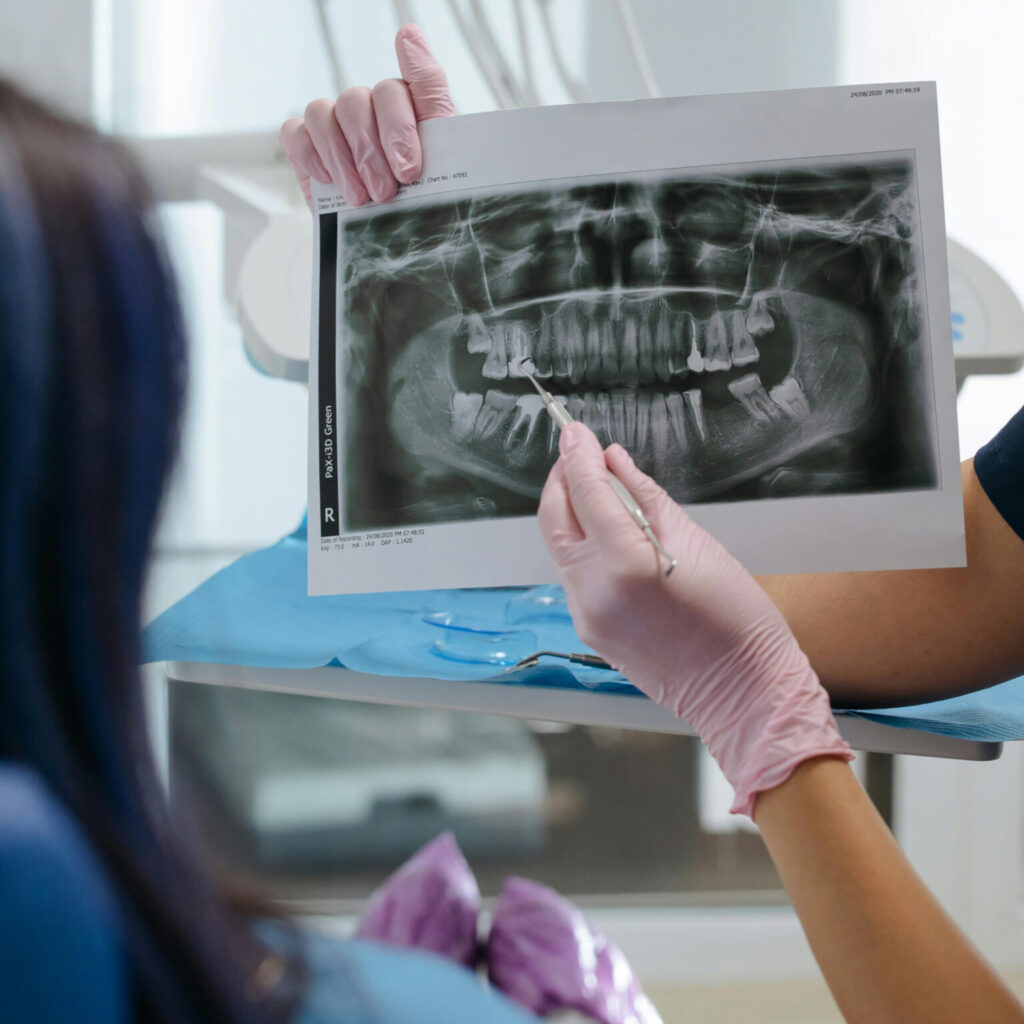
What clinicians often see instead is recession, stain, thickened or leathery tissue texture, persistent calculus buildup, bad breath, and periodontal pockets that are deeper than the patient expects. X-rays may reveal horizontal bone loss or angular defects around specific teeth. Furcation involvement in molars is common in longer-term heavy smokers. Sometimes the first complaint is mobility in a front tooth, especially in the lower incisors, where tartar accumulation can be severe.
There is an emotional layer here too. Many smokers have spent years hearing broad health warnings, and some tune out any message that sounds generic. Gum disease treatment discussions work better when they are specific. It is more effective to say, “You’ve already lost 30 to 40 percent of the support around this tooth, and if we cannot stop the infection, this tooth becomes hard to save,” than to offer a vague lecture about smoking being bad for the gums.
Diagnosing the true extent of the problem
Good treatment starts with a careful periodontal assessment, not a quick cleaning and a hopeful plan. Heavy smokers need full probing depths, bleeding assessment, recession measurements, mobility checks, furcation evaluation where relevant, and diagnostic imaging that actually shows the supporting bone clearly. A six-point probing chart around each tooth gives a much more reliable baseline than a casual partial exam.
This is also where expectations should be set. Some patients arrive wanting “a deep cleaning” as if it were a one-time reset. In reality, gum disease treatment for a heavy smoker usually means active therapy followed by structured maintenance, with re-evaluation driving each next step. The phrase “deep cleaning” can be misleading because it sounds cosmetic or routine. The real goal is infection control and preservation of attachment, not simply removing stain and tartar.
A well-done diagnosis also looks for complicating factors. Diabetes, uncontrolled stress, poor nutrition, clenching, dry mouth from medications, and old defective restorations can all worsen outcomes. Smoking is powerful on its own, but it rarely acts in isolation.
What non-surgical treatment can realistically achieve
Initial periodontal therapy usually begins with scaling and root planing, often by quadrant, with local anesthetic when needed. For heavy smokers, this is not busywork before the “real” treatment. It is essential. Thorough debridement reduces the bacterial burden beneath the gumline, smooths root surfaces, and creates conditions where the tissue has some chance of stabilizing.
Still, the results can be uneven. In a non-smoker with moderate disease and strong home care, pocket depths may shrink nicely after non-surgical therapy. In a heavy smoker, shallow to moderate pockets often improve, but deeper sites can remain active. The tissue may look calmer without truly becoming healthy. That is why re-evaluation matters. Four to eight weeks after treatment is a common window to re-measure pockets and reassess bleeding, plaque control, and symptom changes.
When discussing likely outcomes, I find it useful to frame the goals plainly:
- stop active infection where possible
- reduce pocket depth and inflammation
- preserve teeth with enough remaining support
- identify sites that need surgical access or extraction
- build a maintenance schedule the patient can actually keep
That approach avoids false reassurance. Some teeth can be saved for many years with consistent therapy, even in smokers. Others are poor bets from the start, especially when bone loss is severe, mobility is advanced, or a root has cracked. Good care includes recognizing the difference early rather than spending months on heroic treatment with little chance of durable success.
Home care is not glamorous, but it changes outcomes
No periodontal treatment plan survives poor plaque control at home. That is true for everyone, but especially for heavy smokers. Tobacco creates an environment where bacteria and inflammation gain ground quickly. If brushing is rushed and interdental cleaning is skipped, professional treatment loses traction fast.
The challenge is that many patients have been told to “floss more” so often that the advice barely registers. Specificity works better. For one patient, a soft powered toothbrush twice daily and interdental brushes around wider spaces may be realistic. For another, a water flosser helps because dexterity is limited and compliance with string floss is poor. Chlorhexidine rinses can help short term in selected cases, but they are not a substitute for mechanical plaque removal, and prolonged use has downsides including staining and altered taste. Dentists need to tailor the plan, not recite the same script to everyone.
Dry mouth often deserves attention as well. Heavy smokers frequently complain of a sticky mouth, especially in the morning or after long work shifts without water. Saliva protects the oral tissues and buffers bacterial acids. Reduced saliva does not directly cause periodontitis, but it worsens comfort, hygiene, and overall resilience. Sometimes the simplest interventions, more water, sugar-free xylitol gum if appropriate, or reviewing medications that worsen dryness, make daily home care more tolerable.
The smoking conversation that actually helps
Patients can sense when a clinician is delivering a speech rather than having a useful conversation. The goal is not to win a debate about tobacco. The goal is to improve treatment outcomes. That means linking smoking to something immediate and personal: healing after deep cleaning, likelihood of surgery succeeding, risk of tooth loss, cost of repeated treatment, or trouble with implants later.
Many heavy smokers are not ready to quit on the spot. That does not mean the conversation failed. Even reducing smoking around treatment periods can matter. Ideally, smoking stops completely, but partial harm reduction has practical value. A patient who cuts down sharply for several weeks before and after surgery may heal better than one who smokes heavily without interruption. That is not the same as saying reduced smoking removes the risk. It does not. It simply acknowledges that progress sometimes comes in stages.
The most productive approach is usually direct and nonjudgmental. “Your gums can improve, but smoking is making the response weaker. If you can reduce or stop, even temporarily during treatment, the odds get better.” That kind of language respects the patient’s autonomy while making the biological stakes clear.
When surgery enters the picture
Non-surgical therapy is the foundation, but it does not solve every case. Persistent deep pockets, difficult root anatomy, furcation defects, and bony defects may require periodontal surgery. In heavy smokers, this decision requires caution. Surgical treatment can still be appropriate, but expectations need careful calibration.
Flap surgery may be recommended to gain access for thorough debridement in areas that instruments cannot adequately clean without direct visibility. In some cases, osseous recontouring helps create a more maintainable architecture. Regenerative procedures, such as bone grafting or use of biologic materials, are more selective in smokers because the healing environment is less favorable. Success rates are not zero, but they are generally less predictable than in non-smokers or former smokers.
Mucogingival procedures such as gum grafting also face headwinds in heavy smokers. Blood supply is critical to graft survival. Clinicians often ask patients to stop smoking before and after these procedures for that reason. A patient who insists on continuing to smoke heavily through the healing phase should hear an honest assessment of the elevated risk of complications and failure.
Extraction is sometimes the more responsible option. This can be a difficult message, especially when a patient hopes every tooth can be saved. Yet a tooth with severe bone loss, advanced mobility, and recurrent infection may consume time and money while undermining neighboring structures. Sound judgment in gum disease treatment is not measured by how many procedures are attempted, but by whether the patient ends up with a stable, maintainable mouth.
Antibiotics, antimicrobials, and the limits of shortcuts
Patients occasionally ask whether an antibiotic can “clear up” the infection without deeper treatment. That is understandable, especially if they are anxious about scaling or surgery. Periodontal disease, however, is a biofilm-driven condition. Biofilm is structured, adherent, and resistant to casual eradication. Antibiotics can have a role in selected situations, but they are not a standalone answer.
Locally delivered antimicrobials may help in certain residual pockets. Systemic antibiotics are sometimes considered in aggressive or refractory cases, especially when specific clinical patterns suggest a benefit. But indiscriminate prescribing is poor practice. It contributes to resistance and often delivers far less improvement than patients expect. Mechanical disruption of the biofilm, meticulous root debridement, and sustained maintenance remain the core of effective care.
This is another area where heavy smokers can feel disappointed. They may want a quicker fix because previous dental visits were delayed until the problem became serious. The clinician’s job is to separate what is convenient from what is effective.
Maintenance is where success is won or lost
The most successful periodontal cases among heavy smokers are not usually the ones with the most dramatic treatment plans. They are the ones with disciplined follow-up. After active therapy, many patients need periodontal maintenance every three to four months rather than a standard six-month recall. The reason is simple. Harmful biofilm returns, calculus can accumulate quickly, and residual pockets need close monitoring.
At these visits, a thorough maintenance appointment goes beyond polishing. Pocket measurements may be updated in active areas. Bleeding, mobility, plaque patterns, recession, and changes on radiographs over time all shape the next decision. A site that looked stable three months ago may not look stable at nine months if smoking remained heavy and home care slipped.
This is where small gains add up. A patient who reduces smoking from thirty cigarettes a day to ten, starts using interdental brushes consistently, and keeps maintenance appointments may not become low-risk overnight. But the tissue often responds better than one might predict from baseline. Pockets that were chronically inflamed can settle. Mobility can stabilize. Bleeding can become more localized and manageable. Progress in periodontics is often incremental rather than dramatic.
What about implants for heavy smokers?
Tooth loss leads many patients to ask about implants, sometimes before the periodontal disease itself is controlled. That sequence is backwards. If the mouth remains inflamed and smoking continues heavily, implant outcomes become less predictable. Smokers face higher risks of poor integration, peri-implant mucositis, and peri-implantitis. The same habits and biological limitations that damaged the natural teeth can threaten implants too.
This does not mean implants are forbidden. It means planning must be careful. Existing periodontal infection should be treated first. Smoking status should be addressed plainly. Bone volume, soft tissue quality, bite forces, and hygiene capacity all matter. In some cases, a removable option or a simpler fixed plan is wiser than a complex reconstruction in a high-risk patient.
Patients sometimes assume implants are immune to gum disease because they are not natural teeth. They are not. While implants do not get cavities, the surrounding tissues can absolutely become inflamed and lose bone. If a heavy smoker has struggled to maintain natural teeth, that history should inform the implant discussion rather than being set aside.
Practical adjustments that improve treatment odds
Some solutions are clinical, and some are logistical. In heavy smokers, both https://telegra.ph/Gum-Disease-Treatment-for-Bleeding-While-Brushing-09-01 matter. Treatment tends to go better when the plan is realistic, sequenced, and reinforced in ways the patient can follow in daily life. A few strategies repeatedly prove useful:
- schedule re-evaluation, not just treatment, from the start
- tie smoking reduction to healing windows around procedures
- simplify home care tools so the routine is sustainable
- monitor suspicious sites early instead of waiting for pain
- refer to a periodontist when deep pockets or furcations persist
None of those steps is glamorous. All of them improve decision-making. For example, setting the re-evaluation appointment on the day scaling is booked increases follow-through. Recommending one excellent interdental aid a patient will actually use is often better than suggesting four products at once. Early specialist referral can prevent months of drift in a case that clearly needs advanced care.
The patient experience behind the clinical picture
One detail that tends to be overlooked in technical discussions is fatigue. Heavy smokers with advanced periodontal disease are often carrying dental shame, treatment anxiety, and sometimes financial stress. They may already suspect tooth loss is coming. If every visit feels like a lecture, they disengage. If every explanation is softened so much that the severity is unclear, they delay again.
The middle ground is honest, calm, and specific. “Here’s what is happening. Here’s what we can likely save. Here’s what will need close watch. Here’s how smoking affects each step.” Patients handle difficult news better when it is practical and organized.
I have seen long-term smokers turn around periodontal health enough to keep key teeth for years beyond the original expectation. Usually it did not happen because of a single dramatic change. It happened because the disease was mapped carefully, the worst sites were treated decisively, maintenance became routine, and smoking gradually decreased even if it did not stop immediately. I have also seen the opposite, where impressive treatment was undone by missed maintenance and continued heavy smoking. The difference was rarely mystery. It was usually adherence.
A realistic path forward
Gum disease treatment in heavy smokers is harder, slower, and less predictable than in non-smokers. That is the truth patients deserve to hear. But harder does not mean hopeless. The right plan starts with a thorough periodontal diagnosis, continues with meticulous non-surgical therapy, uses surgery selectively, and relies on close maintenance rather than wishful thinking. Smoking cessation remains the strongest modifiable factor, yet even before full cessation, targeted reduction and better timing around treatment can improve the odds.
The practical goal is stability. Not every pocket will vanish. Not every tooth can be saved. But many mouths can be brought under control well enough to reduce pain, stop progression, improve function, and avoid avoidable extractions. For heavy smokers, success is built from clear communication, disciplined follow-up, and treatment choices grounded in biology rather than optimism alone.
Dental Group Of Beverly Hills
Address: 8641 Wilshire Blvd #125, Beverly Hills, CA 90211
Phone number: +13109296335
FAQ About Gum Disease Treatment
How to improve gum health quickly?
To improve gum health quickly, eliminate plaque buildup by brushing for two full minutes twice a day at a 45-degree angle to the gumline. Floss daily to clean under the gumline, and rinse with an antimicrobial, alcohol-free mouthwash. For immediate relief of soreness, use a warm saltwater rinse.
What is the fastest way to cure gum disease?
To quickly cure early-stage gum disease (gingivitis), eliminate the plaque buildup causing the inflammation. Brush gently but thoroughly for two minutes twice daily, floss daily, and use an antibacterial mouthwash or a warm saltwater rinse. However, if tartar has hardened, professional treatment is necessary.
How do I treat my gum disease at home?
You can treat early gum disease at home by practicing strict daily oral hygiene, rinsing with salt water or antibacterial mouthwash, and quitting smoking. True gum disease (especially advanced forms like periodontitis) cannot be fully cured at home once tartar forms, and you must see a dentist for professional cleanings.